

I work on the simulation and design of energy plants — cryogenic hydrogen storage, process plants and fusion facilities — and on applying AI to that work. My approach: check the physics model first (analytic solutions, published results), then put surrogate models and LLM agents on top, and check AI output against the solver or a published expert worksheet.
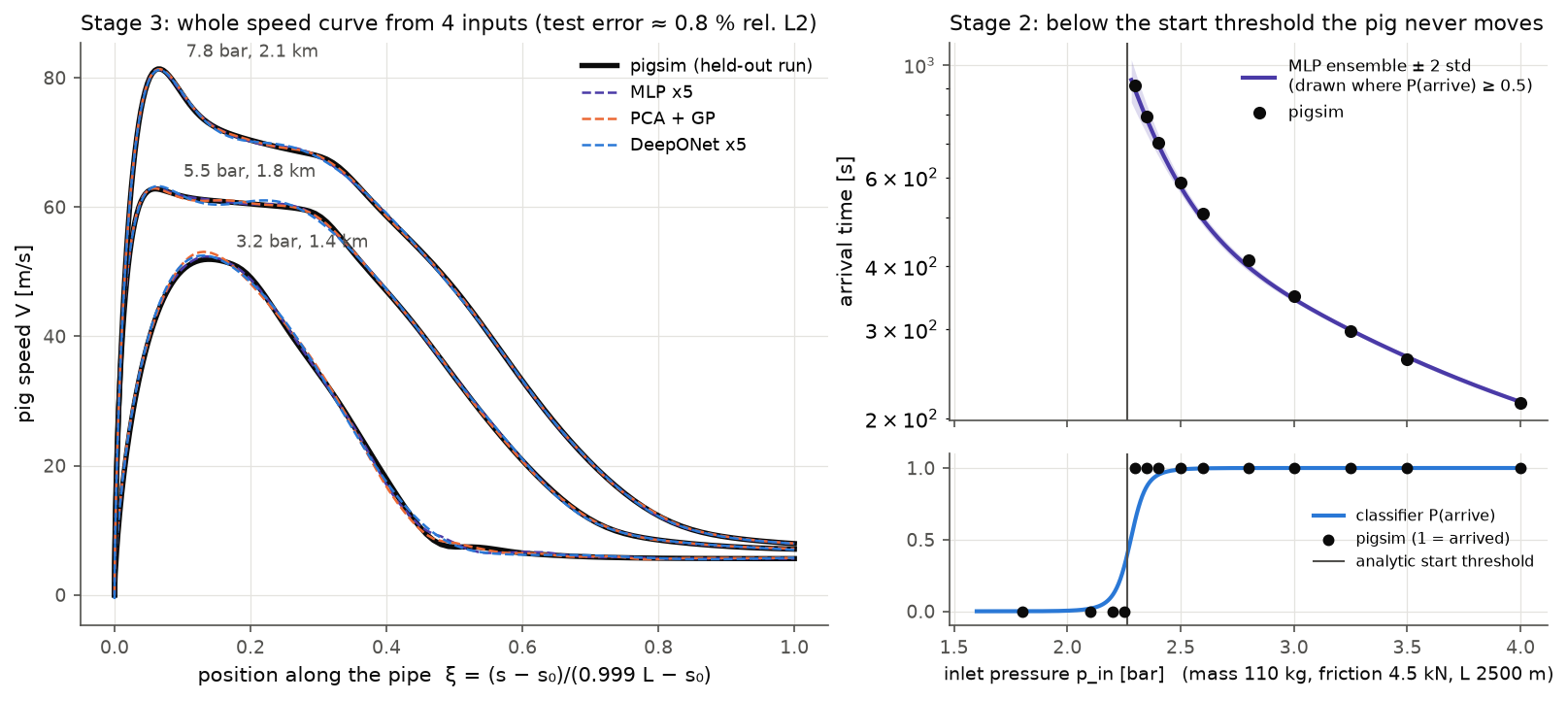
| pigsim-surrogate A transient pipeline-pig solver reproduced from a published paper, and ML surrogates for it compared against simple baselines: Gaussian process, MLP ensemble, DeepONet, anomaly detection, valve control with RL, and an MCP server that exposes the solver and surrogate as tools for LLM clients. |
 |
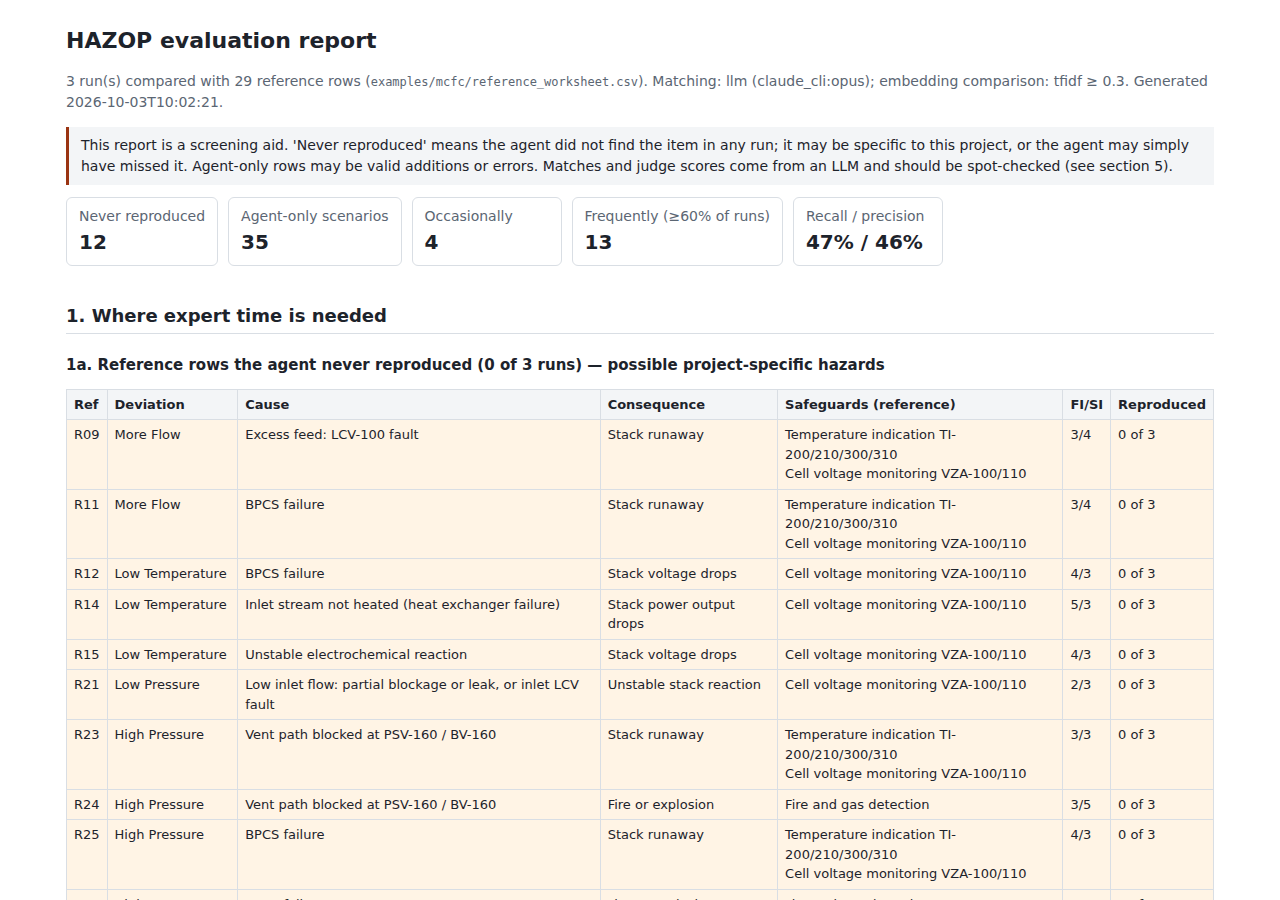
| hazop-agent A simple domain-specific AI agent that drafts HAZOP worksheets from P&IDs, with an evaluation tool that sorts the reference hazards by how often the AI reproduced them, to suggest where expert time is needed. |
 |
- Reproduce → validate → predict, and label which is which.
- Compare against simple baselines and report it when they win.
- Re-verify AI-proposed designs with the physics solver before trusting them.
Code in these repositories was written with an AI coding assistant (Claude Code) under my direction.
Interests: scientific machine learning (surrogates, operator learning), uncertainty quantification, inverse design, domain-specific AI agents (tool calling, MCP).